

 By
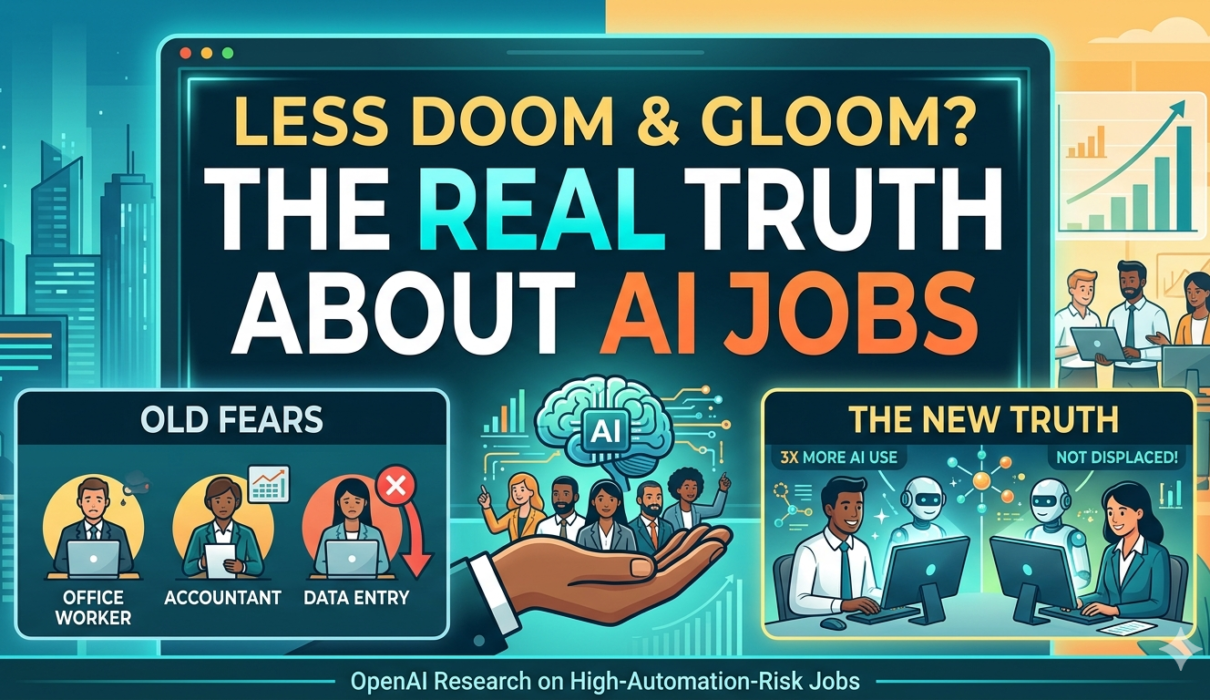
By Workers whose jobs face the highest risk of AI automation — including data-entry keyers, bookkeepers, and customer service representatives — are already using artificial intelligence for three times as many of their core tasks compared to workers in lower-risk roles, according to a new study by OpenAI.
Why This AI Jobs Study Matters
The research, first reported by Axios, reveals that even the most AI-exposed workers are using the technology for only a fraction of what it could theoretically perform. Researchers suggest a more optimistic outcome: workers in high-automation-risk jobs may not automatically face immediate displacement, even as AI adoption continues to expand across industries. Paradoxically, widespread AI use could ultimately increase demand for certain types of human work.
AI Automation Risk by the Numbers: How 900+ U.S. Occupations Are Classified
OpenAI categorized more than 900 occupations — covering nearly all of U.S. employment — into four automation risk tiers:
- 18% face the highest near-term AI automation risk — roles such as data entry, bookkeeping, and customer service
- 24% may see employment shrink, even though these jobs remain human-led—including HR specialists
- 12% could see job growth due to AI—such as software developers and technology roles
- 46% face the least immediate disruption—including teachers and home health aides
AI Job Displacement: What Unemployment Data Actually Shows
Despite widespread concern about AI-driven job losses, signs of disruption have not yet appeared in unemployment data. In fact, workers in the highest-automation-risk occupations have experienced a smaller rise in unemployment than those in the “least immediate change” category. The paper itself cautions that these categories are not job loss forecasts — they are a framework for identifying where near-term labor market pressure may surface first.
The Gap Between AI Capability and Actual Workplace AI Adoption
Workers in the most vulnerable job categories are using AI more than any other group for tasks central to their roles. However, they have barely begun to close the gap between current usage and AI’s theoretical capacity. AI could theoretically handle up to 90% of tasks in the highest-risk occupations — yet those workers are currently using it for less than a quarter of that potential, based on OpenAI’s usage data.
Will AI Create or Destroy Jobs? The Demand Effect Explained
Whether AI ultimately destroys or creates jobs may hinge on a critical economic dynamic: when AI makes a task easier or cheaper, people often simply consume more of it—a concept known as the “demand effect” or “Jevons paradox” in the context of labor.
OpenAI Chief Economist Ronnie Chatterji illustrated this point to Axios using coding as an example: when AI coding tools first emerged, many assumed the total amount of code written would stay fixed. Instead, coding became accessible to far more people—driving greater demand, not less.
The implication for the future of work and AI is significant: productivity gains from automation don’t necessarily shrink labor markets. They can expand them by unlocking new demand and lowering barriers to entry across industries.