

 By
By Bridal clients and beauty customers are arriving at salons with AI-generated inspiration photos—and makeup artists and hair stylists are bearing the burden of managing unrealistic expectations.
Why It Matters
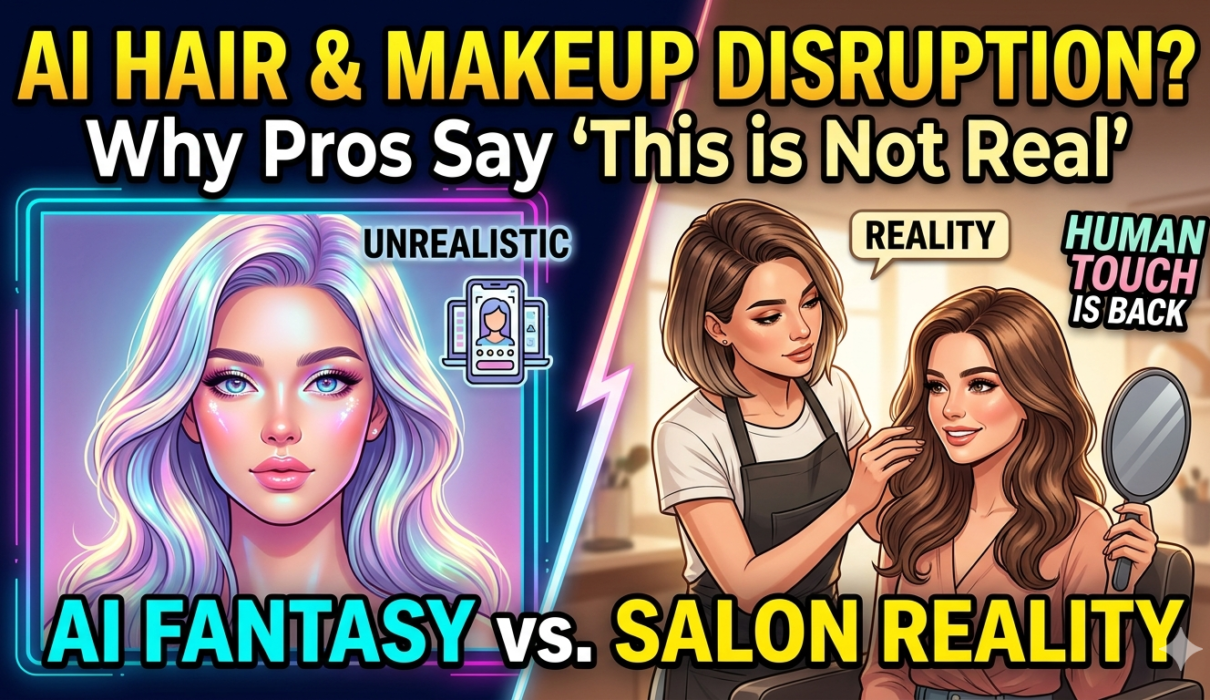
One of the beauty industry’s most pressing challenges today isn’t split ends or poor blending technique—it’s the growing flood of AI-generated beauty images circulating on social media platforms. These hyper-realistic, digitally fabricated images are creating a major disconnect between client expectations and what professional stylists can realistically deliver.
Celebrity hair extension specialist and TV personality Angelina Murphy puts it plainly: “I have to really dive deep into the consultation to really let them know the clarity about this.” This is a digital fantasy.”
The rise of AI content in beauty has created two serious problems: unrealistic expectations for clients and an unfair professional burden for artists. As Murphy explains, “This is not real: the roots aren’t real, the color isn’t real, and her bone structure isn’t real. The end result will never, ever look like this.”
AI-Generated Bridal Inspiration: A Growing Problem
Across social media, makeup artists and hair stylists are publicly expressing frustration with the surge of AI-generated beauty inspiration images—with certain photos appearing repeatedly as a recurring source of disappointment in consultations.
Mehry Schmitt, founder of Northeast-based bridal beauty studio Gloss Beauty + Bridal, reports that among the 40 to 50 brides her company serves each year, at least half arrive with AI-generated photos as their primary inspiration.
For bridal beauty professionals, this is a uniquely high-stakes issue. Styling an entire wedding party on a tight schedule demands efficiency and realistic planning. When bridesmaids bring AI-generated reference images, Schmitt and her team must quickly assess which elements are technically achievable.
“Is it frustrating? It can be, but I try not to let it frustrate me and just use it as a way for me to flex my artistry and my skill set,” she says.
The Broader Impact of AI on Creative Industries
AI-generated content has become a disruptive force across many industries beyond beauty — from real estate listings featuring impossible interiors to gardening forums filled with unachievable landscape designs. DIY communities and hobbyist spaces have been flooded with glossy, AI-produced imagery that sets unrealistic standards.
Images and videos produced by advanced generative AI tools from tech giants including Google, Meta, and OpenAI have saturated social media feeds, often deceiving even discerning users. The problem has escalated further with the rise of AI models and virtual influencers, intensifying already extreme beauty standards and stoking widespread industry anxiety.
How Beauty Professionals Are Responding
Despite the frustration, skilled makeup artists and hair stylists are adapting rather than shutting down the conversation. The professional approach involves carefully dissecting a client’s inspiration image during consultation—not shaming clients for not recognizing AI-generated content—and educating them with honesty and compassion.
According to Murphy, most clients respond well when consultations are clear and thorough. While some results from AI inspiration are achievable, they often require multiple appointments—a far cry from the seconds it takes to generate an AI image.
“We have to understand that they don’t know they’re coming in with an AI photo thinking, ‘That’s exactly what I want,'” Murphy says. “Little do they know, it’s not usually doable.”
The Bottom Line: Embracing the New Normal
Schmitt says she has chosen to lean into the challenge, viewing the AI disruption as both an obstacle and an opportunity. For beauty professionals who fail to adapt, she warns, the consequence will be failing their clients.
But there’s an unexpected silver lining. As Schmitt reflects: “It’s really showing us how impactful personal touch is — we’re creating more of a human experience from something that isn’t human.”
In an era increasingly shaped by artificial intelligence, the irreplaceable value of skilled, human artistry has never been more apparent.