

 By
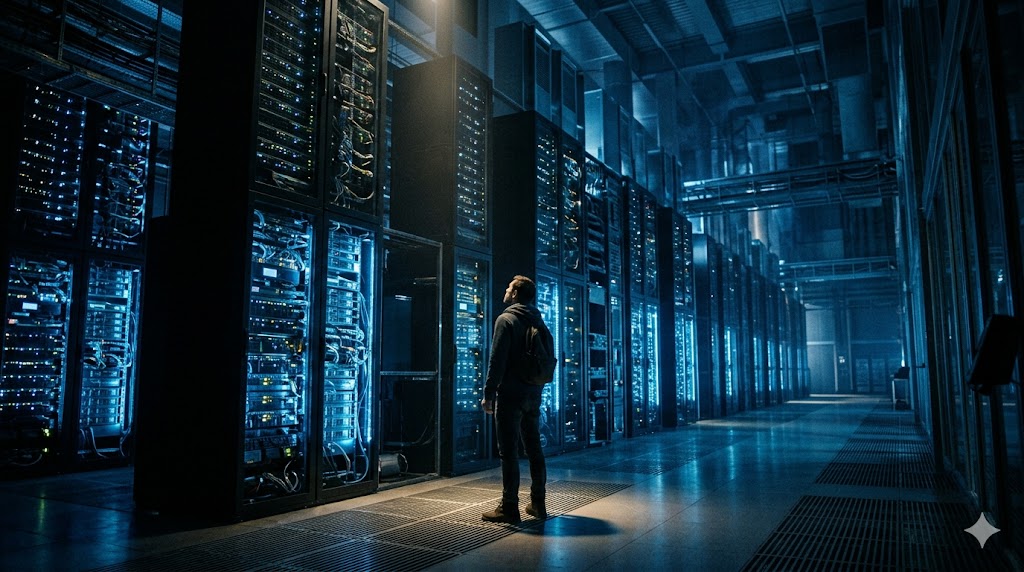
By Imagine reading an article about how much people trust their doctors and nurses. It sounds like standard news, right? Recently, a major publication published an article claiming exactly that. But there was a massive catch that wasn’t immediately mentioned: not a single human being was actually asked. The “findings” came from a computer simulation run by an AI startup.
This practice is called silicon sampling, and it is quietly infiltrating the world of market research and public opinion. The concept is highly tempting for polling companies: instead of spending time and money trying to get humans to answer phone calls or fill out online surveys, why not just use Large Language Models (LLMs) to generate responses that sound like what a human would say?
It’s cheap, it’s fast, and it avoids the messy reality of talking to real people. But it’s also fundamentally breaking how we understand society.
The Problem with Fake Opinions
Public opinion data is supposed to guide policies, political strategies, and social science. It only holds value because it represents the actual, lived beliefs of real people. When we replace genuine human voices with AI simulations, we aren’t gathering opinions anymore—we are just generating highly convincing fictions.
Over a century ago, journalist Walter Lippmann wrote that opinion polls are essential tools for democracy. They help us see past our own “pseudo-environments” and understand the true will of the people. While polls have never been perfect, they were always an honest attempt to get closer to the truth.
Today, traditional polling is incredibly difficult. People don’t pick up the phone, and web surveys are notoriously unreliable. To compensate, pollsters have had to lean heavily on statistical models. If a poll accidentally surveys 80% Republicans and only 20% Democrats, the pollster will use a mathematical model to “rebalance” the results to better reflect reality.
But even that is messy. Every model is built by a human with their own biases. Back in 2016, a famous experiment gave five top pollsters the exact same raw survey data. They all came back with different results—with a 5% margin of difference—simply because of how they chose to weigh the variables. This showed that modeling alone can nudge a poll in a specific direction.
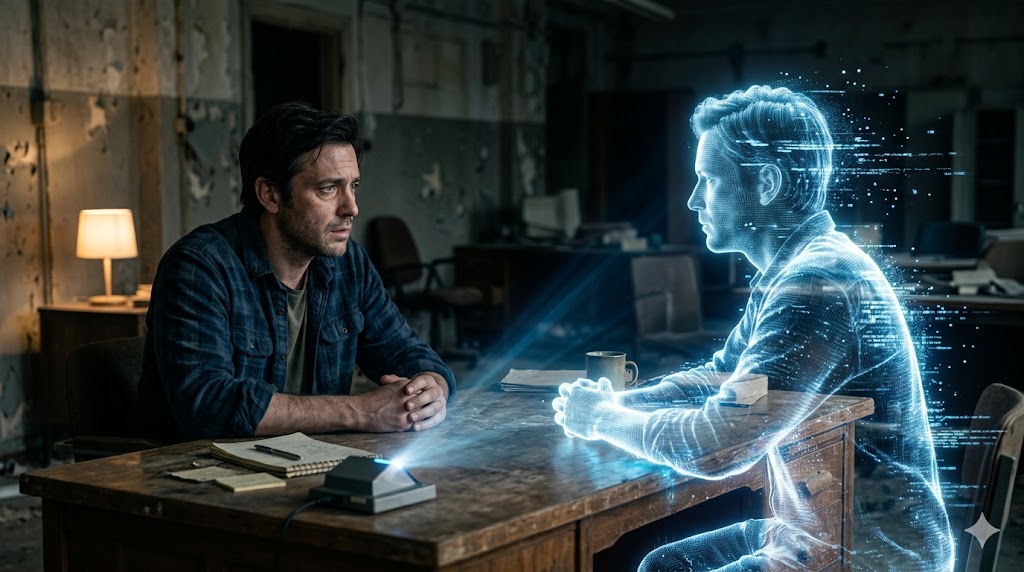
AI Doesn’t Gather Opinions; It Just Guesses
Silicon sampling takes the existing biases in polling and puts them on steroids.
The tech innovators behind this trend argue that because AI models are trained on massive amounts of past human data, they can accurately predict human behavior in the present. But prediction is not polling. The entire point of a poll is to capture the current, evolving mood of the public, not to regurgitate historical patterns.
Furthermore, early studies are already showing that the biases inherent in statistical modeling are actually worse in silicon sampling. The further we remove actual people from the equation, the more the data just becomes a mirror reflecting the pollster’s own assumptions.
Big Money is Betting on “Digital Twins”
Despite the glaring flaws, the AI polling industry is booming. Hundreds of millions of venture capital dollars are pouring into startups promising “believable proxies of human behavior.”
Major players are already on board:
- Ipsos is working with Stanford to pioneer the use of synthetic data.
- Gallup has partnered with an AI firm to create 1,000 AI-generated “digital twins” of respondents.
- CVS is using the same startup to “answer questions about its customers” without actually asking them.
The primary driver here is cost. Market research is incredibly expensive, and silicon sampling promises to make launching products or testing ideas drastically cheaper.
The Artificial Society
If we don’t hit the brakes on silicon sampling, we risk destroying whatever trust is left in public opinion and social research.
When you package muddled AI generations as objective facts, you get dangerous results. Just look at the 2024 U.S. Presidential election: an AI polling firm ran a full simulation on the eve of Election Day and confidently predicted a narrow victory for Kamala Harris. It was purely fictional, yet it was treated like scientific knowledge.
We cannot afford to let an artificial society dictate how we understand our real one. It’s time to remember that human opinions actually require humans.