

 By
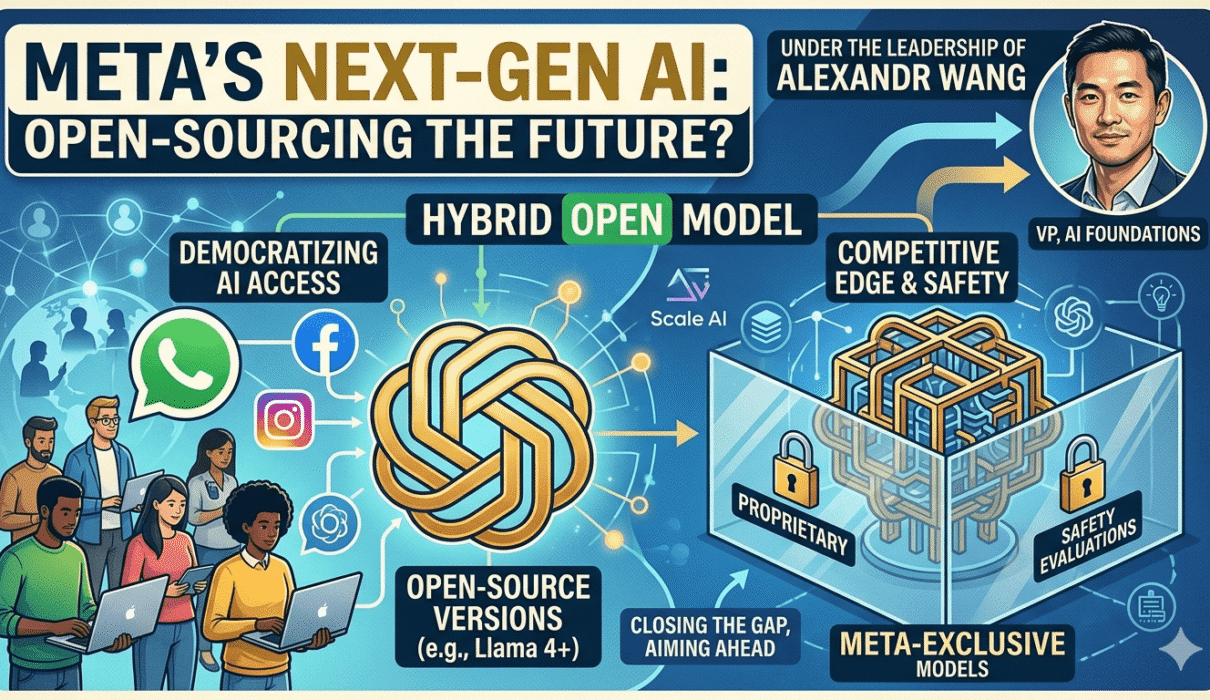
By Meta is gearing up to release its first batch of AI models developed under the direction of Alexandr Wang — and plans to eventually make versions of those models available under an open source license, according to sources familiar with the matter.
Why it matters: Meta has long been the most significant American company willing to let outside developers modify its frontier models. Recently, however, speculation has been mounting that the company could walk away from that approach entirely. These new plans signal that, while the strategy is shifting, the open ethos isn’t dead — just evolving.
Before any public release, Meta intends to keep certain components proprietary and conduct thorough safety evaluations to ensure the models don’t introduce new risks, sources say.
Wang’s vision: The move reflects Wang’s broader philosophy that Meta can democratize access to cutting-edge AI while championing a U.S.-built alternative for developers worldwide. In Wang’s view, Anthropic and OpenAI are increasingly pivoting toward government contracts and enterprise clients — leaving a gap that Meta can fill by going in the opposite direction: wide, consumer-focused distribution across platforms and geographies.
Catching up — and aiming ahead: Meta has acknowledged that its new model family is designed to close the gap after its Llama 4 lineup fell noticeably behind competitors. The longer-term ambition is to build models that lead the industry. That said, both OpenAI and Anthropic are expected to drop significant new models of their own soon, and Meta’s leadership knows its releases may not be universally competitive. Still, the company believes it will have meaningful strengths in areas that resonate with everyday consumers.
A hybrid, not a reversal: Don’t expect Meta to return fully to its earlier, more freewheeling openness. Wang has signaled that its largest flagship models will stay proprietary — a deliberate pivot toward a hybrid model. Meta’s argument is that it still reaches users at unmatched scale through WhatsApp, Facebook, and Instagram, free global platforms that no rival can easily replicate.
The bigger trend: Meta’s emerging strategy looks like a calculated hedge — open enough to win developer trust and influence the AI ecosystem, but closed where the most powerful models carry a real competitive advantage. This mirrors a broader industry pattern: even the most vocal open-source advocates are pulling back on their most capable systems. Alibaba, for instance, recently kept its strongest new Qwen models proprietary, abandoning its own open-source playbook.
Background: Wang joined Meta last year as part of a $14.9 billion deal involving Scale AI, where he previously served as CEO.