

 By
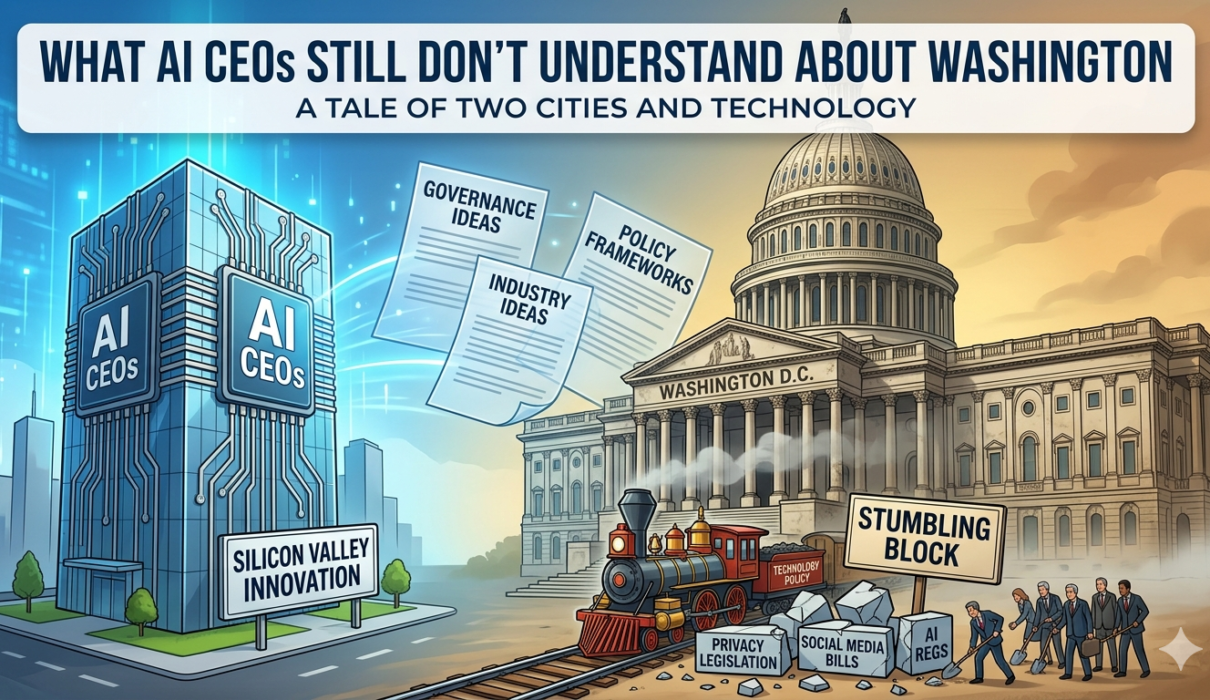
By The ambitious AI governance proposals from Silicon Valley’s top executives may be overly optimistic, given the city’s history of struggling with technology policy.
Why It Matters
Leading AI executives — from OpenAI’s Sam Altman to Anthropic’s Dario Amodei — actively shape the regulation and promotion of their products. They’ve put forward ambitious policy frameworks aimed at managing the technology’s far-reaching impact. Yet Congress has repeatedly struggled to advance meaningful legislation on privacy and social media and now faces the same challenge with AI. Lawmakers must navigate aggressive industry lobbying while also responding to growing public pressure over the technology’s future.
Background
OpenAI recently released an industrial policy paper arguing that AI will reshape civilization on a scale comparable to the Industrial Revolution. The document calls for bold interventions, including tax reform and a four-day workweek—proposals that echo ideas progressives have championed for years, such as expanded childcare support. Anthropic, by contrast, has focused its policy recommendations on internal governance and transparency, proposing economic audits to measure AI’s effect on employment, stronger export controls, and expanded government oversight of AI systems.
Behind the Scenes
The people crafting these proposals are not newcomers to policy circles. OpenAI’s chief global affairs officer, Chris Lehane, has long advocated for redistributing the benefits of emerging technologies — from pushing a “new deal” for cryptocurrency to promoting policies that spread AI’s economic gains more broadly. At Anthropic, public policy head Sarah Heck is expanding the company’s Washington presence. Heck previously served at Stripe and worked on global entrepreneurship and public diplomacy at the White House National Security Council under President Obama.
What They’re Saying
Lehane, a veteran political strategist, told Axios that OpenAI is prioritizing state-level advocacy, where it sees greater opportunity for progress — particularly in an election year when voters are eager to ensure they benefit from AI’s rise.
Lehane said, “Every politician claims to lead, but they usually follow voter sentiment and will act quickly if they see it.”
Heck echoed this sentiment, pointing to Anthropic’s policy stances on model transparency, economic impacts, and energy. “We know the majority of Americans want government to take action on these issues,” she said.
Anthropic has also supported state-level AI transparency legislation, aimed at addressing the technology’s most significant risks, while simultaneously calling for a unified federal standard. The company argues that transparency is the essential first step toward giving both policymakers and the public meaningful visibility into how AI systems are built and deployed.
The Bigger Picture
Silicon Valley and Washington continue to operate on fundamentally different frequencies. The tech world moves fast and embraces disruption; Washington moves slowly when it moves at all.
“Both coasts think they’re in charge,” said Nand Mulchandani, former chief technology officer of the CIA and of the Pentagon’s Joint Artificial Intelligence Center, speaking with Axios at the HumanX conference in San Francisco. But Silicon Valley now wields power that rivals that of a government. What we’re seeing now is the first large fight over who’s driving the bus.”
While the AI industry has found some allies in the White House, the Trump administration has also encountered its limitations. Attempts to override state-level AI legislation have repeatedly failed, and the administration’s most recent policy framework proposal for Congress faces a difficult path forward.
The Bottom Line
AI companies can continue floating ambitious policy ideas—fully aware that those ideas are unlikely to become law— and still position themselves as the voices that warned Washington while it did nothing.