

 By
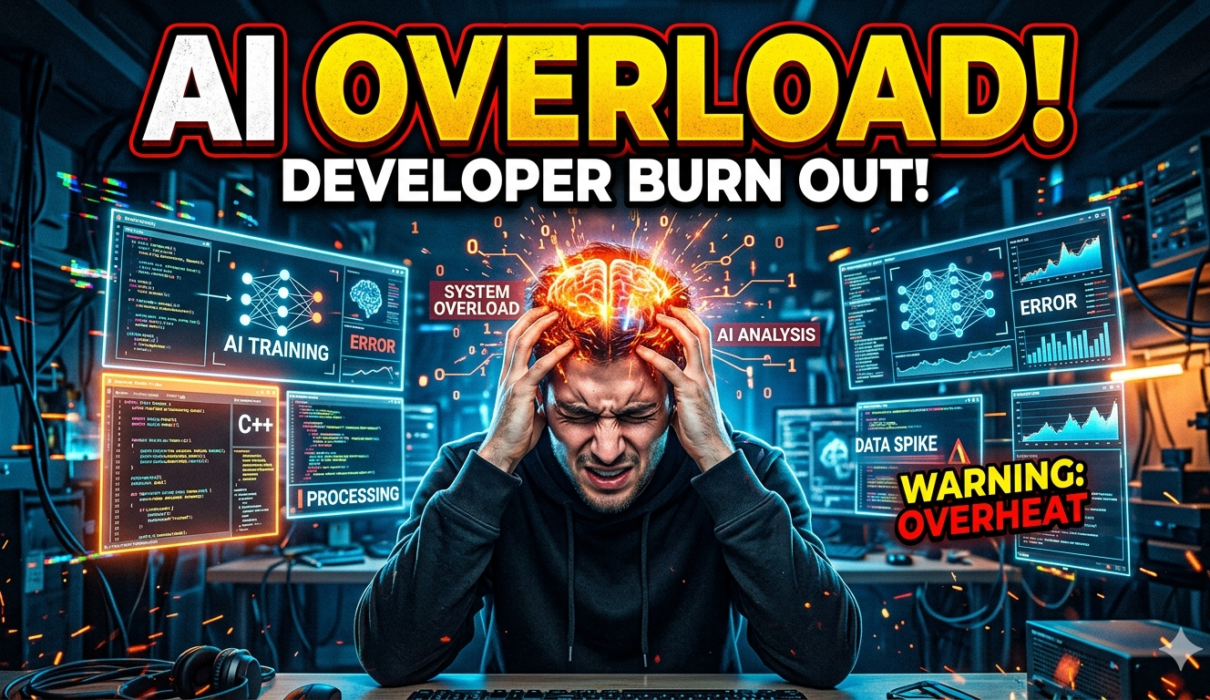
By A surprising trend is emerging in the tech world—and it’s not all positive. While AI coding tools promise speed, automation, and limitless productivity, many developers are now saying something alarming: these tools might be overwhelming their brains.
What started as a productivity boost is quickly turning into something that feels a lot like mental overload… or even addiction.
🚀 The Rise of Agentic AI Coding Tools
Modern AI tools such as Claude Code, OpenAI Codex, and OpenClaw are changing how developers build software.

These tools can:
- Write code automatically
- Test and debug programs
- Deploy software with minimal human effort
Instead of writing every line manually, developers now:
- Give instructions (prompts)
- Watch the AI execute
- Review results
- Repeat
Sounds efficient, right? It is—until it starts taking a toll.
🧠 When Productivity Turns Into “AI Psychosis”
Even top tech minds are feeling the pressure.
Andrej Karpathy, who famously coined the term “vibe coding,” revealed that he has been in what he calls a “state of AI psychosis.”
Here’s what that looks like:
- His coding ratio flipped from 80% manual / 20% AI → 0% manual / 100% AI
- He spends up to 16 hours a day managing AI agent workflows
- He feels anxious when unused tokens remain in his subscription
This isn’t just heavy usage—it’s bordering on obsession.
⚠️ Sleep Deprivation and “Cyber Psychosis”
Garry Tan shared a similar experience, calling it “cyber psychosis.”
- He reported staying awake for 19 hours straight
- Some startup founders are pushing even further—36 hours without sleep
Even Tan himself admitted:
This kind of grind is unhealthy and unsustainable.
📉 The Human Brain Has Limits
Veteran developer Simon Willison, with over 25 years of experience, highlights a key issue:
The human brain can only handle so much at once—and AI is pushing it beyond that limit.
Key challenges include:
- Information overload
- Constant decision-making
- Rapid context switching
Similarly, AI researcher Tim Dettmers explains that working with multiple AI agents requires constant mental switching, something humans naturally struggle with.
🎰 AI Tools Are Starting to Feel Addictive
There’s another layer to this problem: addiction-like behavior.
Developers describe the experience as similar to gambling:
- You enter a prompt
- You get a result
- You feel rewarded
- You repeat
But when results fail, you try again—creating a loop.
Developer Armin Ronacher summed it up perfectly:
“We barely sleep, but we keep building amazing things.”
🧪 The Science Behind “Brain Fry”
Researchers from Boston Consulting Group and University of California Riverside have labeled this phenomenon “brain fry.”
According to findings published in Harvard Business Review, excessive AI use can lead to:
- Mental fatigue
- Increased errors
- Decision exhaustion
- Higher chances of burnout
- Greater intention to quit jobs
Even more concerning:
Companies often see higher AI usage (tokens) as a sign of productivity—ignoring the mental cost.
🏢 Even Hardcore Work Culture Had Limits
Yes, intense work isn’t new in tech.
Elon Musk and his teams have long worked extreme hours, sometimes sleeping at factories.
But here’s the difference:
👉 They still slept.
With AI agents, some developers are skipping rest entirely.
😴 When It Gets Serious: Real-Life Impact
Quentin Rousseau, CTO of incident platform Rootly, experienced the downside firsthand.
After switching to AI-driven coding:
- He struggled to sleep for months
- His brain wouldn’t “shut off”
- He eventually needed medical help and sleep medication
Despite being a strong believer in AI, he warns:
These tools are designed to be addictive—like slot machines.
⚖️ The Double-Edged Sword of AI Productivity
Why is this happening?
Because AI agents:
- Expand what feels possible
- Speed up creation dramatically
- Constantly reward interaction
But at the same time:
- Drain mental energy
- Reduce focus
- Blur boundaries between work and rest
Founders and high performers are especially vulnerable—they’re often the first to push tools to their limits.
🔮 What’s Coming Next?
If developers—arguably the most tech-savvy users—are already experiencing burnout, this could be a warning sign for everyone.
👉 AI “brain fry” might not stay limited to coders.
👉 It could spread to marketers, writers, designers, and beyond.
The future of work may depend not just on how powerful AI becomes…
but on how responsibly humans use it.